
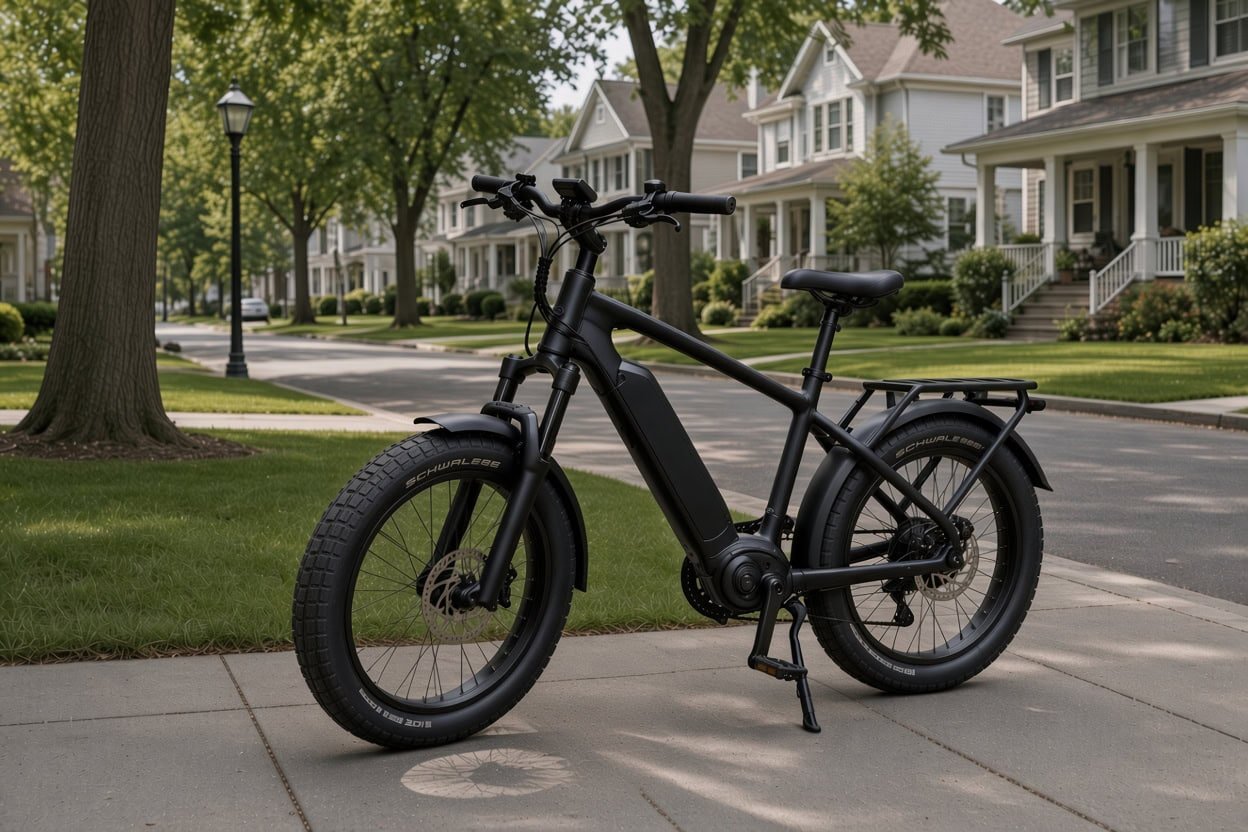
E-bikes make commuting, errands, and recreation easier than traditional bikes, offering pedal assistance, less sweat, and greater range. About 1.5 million were sold in the U.S. in 2025, and demand keeps rising.
Before you buy, understand the insurance challenges. In most states you are not required to carry e-bike insurance the way you must for a car. Yet your homeowners, renters, or auto policy often leaves major gaps for theft, damage, and liability. Many new owners discover this only after a claim is denied.
This guide explains e-bike classification, why standard policies fall short, the biggest risks, dedicated insurance options and costs, and practical steps to protect yourself before you purchase.
E-Bike Classes and Why Classification Matters for Insurance
Most U.S. states follow a three-class system for compliant e-bikes (motors of 750 watts or less):
- Class 1 Pedal-assist only; motor stops at 20 mph.
- Class 2 Throttle and/or pedal-assist; motor stops at 20 mph.
- Class 3 Pedal-assist only; motor stops at 28 mph (usually requires a speedometer).
In the vast majority of states, Class 1 to 3 e-bikes are treated as bicycles. No driver’s license, registration, or insurance is required to ride them legally.
New Jersey is the main exception. As of mid-2026, it requires registration for e-bikes and a license for riders. Liability insurance is mandatory for throttle-equipped models and those that assist above 20 mph (minimum limits roughly $15,000 per person / $30,000 per accident for bodily injury and $5,000 for property damage). A homeowners or auto policy does not satisfy the requirement.
Anything that exceeds the class limits (higher wattage, a removed speed limiter, or pure throttle capable of higher speeds) is often reclassified as a moped or motorcycle. That can trigger licensing, registration, and mandatory insurance rules, and it can void coverage on policies written for standard e-bikes.
Buyer tip: Confirm the exact class and motor rating on the manufacturer’s label before purchase. Stick to reputable, compliant models.
Why Homeowners, Renters, and Auto Insurance Often Do Not Cover E-Bikes
This is the core challenge of e-bike insurance. Standard homeowners or renters policies frequently classify e-bikes as “motor vehicles” (self-propelled land vehicles) and exclude them from both property coverage (theft, damage, fire) and personal liability coverage.
Auto policies typically do not cover them either. E-bikes are not registered motor vehicles and are not listed on the policy.
Common coverage gaps include:
- Your $2,000 to $6,000+ e-bike is stolen from a rack, workplace, or garage → claim often denied or limited by low sublimits and high deductibles.
- You injure a pedestrian or damage a car while riding → liability coverage may not respond.
- Crash damage, battery issues, or theft away from home → frequently excluded or poorly covered.
- Umbrella policies often follow the same motorized-vehicle exclusions.
Even when limited coverage exists, deductibles can be high relative to the bike’s value, and battery or electronic component damage is frequently restricted.
The Biggest Practical Risks for E-Bike Owners
Liability is the most serious exposure. E-bikes are heavier and can travel faster than conventional bikes, raising the potential for serious injury claims. If you are at fault and uninsured (or underinsured), you face personal liability for medical bills, lost wages, and damages that can reach six figures. Many riders carry no dedicated liability coverage, which also complicates recovery for victims.
Theft and damage are common. High-value motors, batteries, and components make e-bikes attractive targets. Specialized insurers report that theft and component problems drive many claims.
Battery fire risk has made some insurers cautious about home storage and charging. Most incidents involve modified, cheap, or non-compliant batteries rather than reputable brand bikes, but the risk has prompted tighter rules or exclusions by some carriers. Proper charging practices and quality equipment substantially reduce this risk.
Modifications are a frequent pitfall. Removing a speed limiter or installing a higher-power motor can push the bike outside its legal class. Insurers may deny claims for material misrepresentation or because the bike no longer qualifies as an insured e-bike. The modification can also make the bike illegal to ride on public roads in many places.
Dedicated E-Bike Insurance Options and Typical Costs
Specialty policies fill the gaps left by standard home and auto coverage. Providers such as Velosurance, Markel, BikeInsure, and others offer standalone coverage designed for Class 1 to 3 e-bikes.
Typical annual premiums range from $100 to $300 for a mid-priced bike (often $8 to $25 per month), depending on the bike’s insured value, your location, deductible, and whether you add liability, medical payments, or other options. A $2,000 to $4,000 e-bike is usually far less expensive to insure than replacing it out of pocket after a theft.
These policies commonly cover:
- Theft (including away from home, subject to locking requirements)
- Accidental damage and crash damage
- Liability if you injure someone or damage property
- Sometimes transit, accessories, medical payments, or roadside assistance
Always confirm eligibility for your specific class and motor rating in writing. Costs scale with the bike’s value; higher limits and lower deductibles increase the premium.
Practical Tips for Prospective E-Bike Buyers
- Check your existing policies first. Call your homeowners or renters agent and ask specifically whether a Class 1, 2, or 3 e-bike is covered for theft, damage, and liability. Get the answer in writing. Do not assume “it’s just a bike.”
- Know your local rules. Confirm your state’s classification, any helmet or age requirements, path/sidewalk restrictions, and whether insurance is mandated (New Jersey is the primary outlier for many models).
- Stick to legal, reputable bikes. Buy from established brands that meet the 750-watt and class speed limits. Avoid “unlocked” or high-power models marketed as e-bikes if they do not comply. Both coverage and legality suffer.
- Budget for insurance. Add $100 to $300 per year to your ownership cost calculation. Compare it with the replacement cost of the bike and the potential cost of a liability claim.
- Protect the bike practically. Use a high-quality lock that meets insurer requirements, consider a GPS tracker, store and charge batteries according to manufacturer instructions, and avoid leaving the bike outside unsecured for long periods.
- Compare dedicated coverage early. Specialty e-bike policies are available online and through independent agents. Review liability limits, theft conditions (locking requirements), deductibles, and exclusions carefully.
Frequently Asked Questions About E-Bike Insurance
Do I need e-bike insurance by law?
For compliant Class 1 to 3 e-bikes, in most states, no. New Jersey requires liability insurance for certain models (throttle or assist above 20 mph). Check your state DMV for current rules.
Does homeowners insurance cover e-bikes?
Often not, or only with severe limitations. Many policies exclude motorized vehicles from both property and liability coverage. Sublimits and high deductibles further reduce usefulness. Always verify with your insurer in writing.
How much does e-bike insurance cost?
Standalone policies typically run $100 to $300 per year for a mid-range bike, depending on value, location, and coverage selected.
What happens if my e-bike is modified?
Modifications that change class or power can void coverage and may make the bike illegal to ride on public roads. Stick to stock, compliant models.
Is liability the biggest risk?
Yes. An at-fault injury claim can far exceed the cost of the bike itself. Dedicated liability coverage is often the most important protection.
E-bikes deliver clear benefits for commuting and recreation. For most buyers the insurance challenge is manageable once understood. The key distinction is that “no insurance required” does not equal “already covered by what I have.” Checking coverage before you buy, choosing a compliant bike, and deciding whether a dedicated policy makes sense will help you enjoy the ride with fewer surprises.